
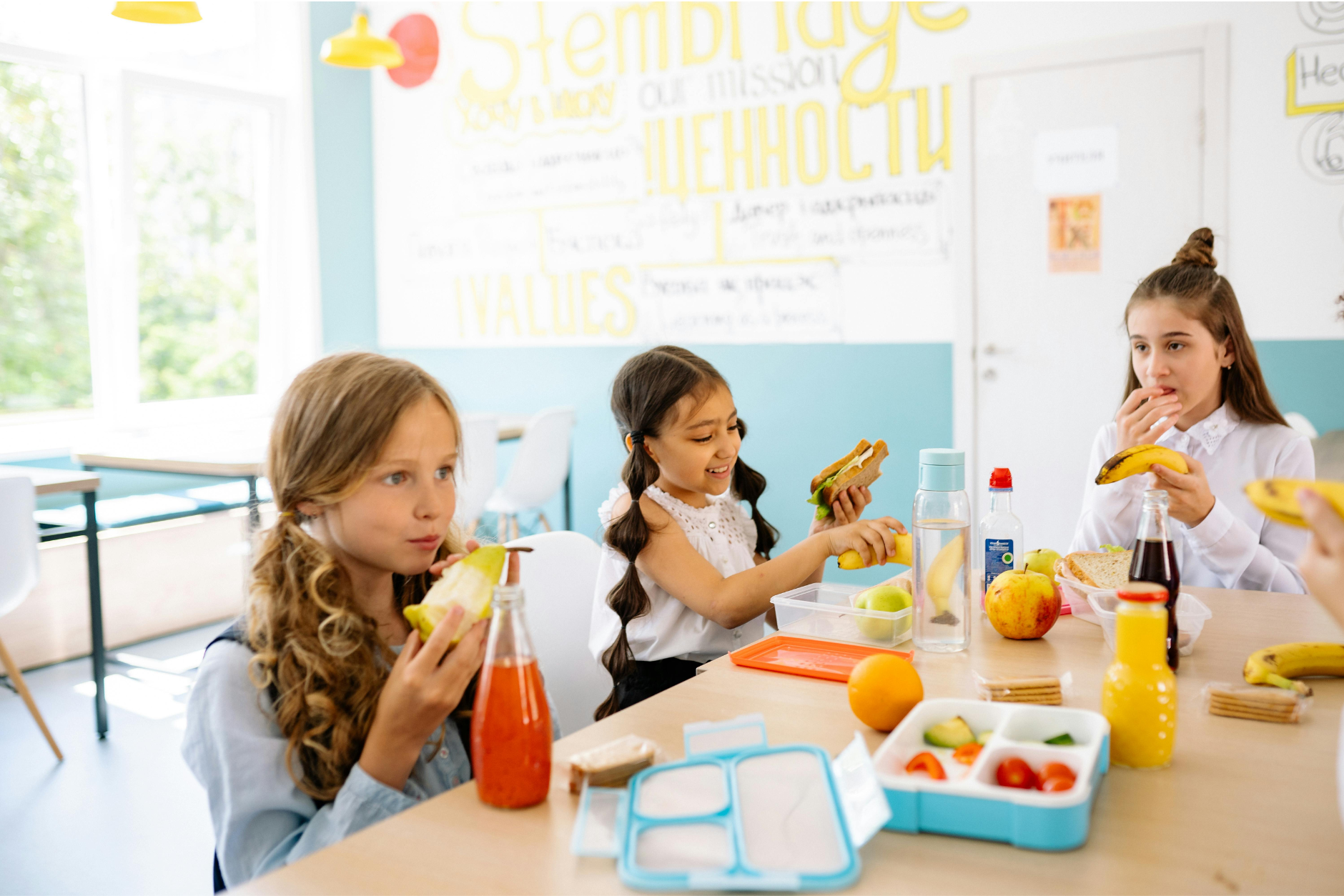
Packing lunches can feel like a lot.
We are trying to send foods our children will actually eat, keep everything at a safe temperature, remember daycare or school policies, and somehow get everyone out the door on time.
And once that lunchbox leaves home, we are not sitting beside our child while they eat.
The amount of time, support, and supervision children receive can vary between daycares, schools, camps, and other programs. Lunchrooms can also be busy. Children may be talking with friends, watching what is happening around them, or thinking about getting outside for recess.
We cannot control every part of their lunchtime, but we can make their food easier to recognize, open, hold, chew, and manage independently.
That is what safer lunch packing is really about.
Not creating the perfect lunch.
Not cutting every food into tiny pieces forever.
Simply preparing food in a way that matches our child’s age, eating skills, and environment.
The Quick Lunchbox Safety Check
Before closing the lunchbox, ask:
Can my child comfortably manage the shape and texture of this food?
Can they open the containers and packages on their own?
Will cold food stay cold and hot food stay hot?
Does everything follow the daycare, school, or camp allergy policy?
Is there at least one food my child knows and usually feels comfortable eating?
A lunch that is familiar, manageable, and stored safely does not need to look impressive to do its job well.
Start With a Simple Lunch Formula
When we are staring into the fridge at 7:15 a.m., a flexible formula can make packing lunch much easier.
This is not an official nutrition rule, and every lunch does not need to include every category.
Try starting with one familiar anchor food + two or three supporting foods + water.
A Familiar Anchor Food
This is something our child usually recognizes and accepts.
It might be:
A sandwich or wrap
Pasta or rice
Yogurt
Leftovers in a thermos
A muffin with cheese
Crackers with hummus
A familiar cultural or family food
The anchor does not have to be the largest or most nutritious item. Its job is to make the lunch feel familiar and approachable.
Vegetables or Fruit
Fresh, frozen, canned, cooked, or leftover produce can all have a place in a lunchbox.
Ideas include:
Quartered grapes
Sliced strawberries
Banana
Thin apple slices
Soft orange pieces
Steamed vegetables
Grated carrot
Thin cucumber strips
Roasted vegetables
Unsweetened fruit cups
How the food is prepared matters just as much as the food itself, especially for babies, toddlers, and preschoolers.
Protein or Iron-Rich Foods
These foods can support growth and help create a satisfying lunch.
Ideas include:
Shredded chicken or turkey
Fully cooked egg
Yogurt or cottage cheese
Beans or lentils
Hummus
Tofu
Thinly sliced or grated cheese
Fish with every bone carefully removed
Nut or seed butter spread thinly, when permitted by the program
For babies and young toddlers, beans may need to be mashed or flattened, meat should be tender and appropriately shredded or chopped, and sticky spreads should never be served as a thick spoonful.
Whole Grain or Starchy Foods
These foods help provide energy for growing bodies and busy days.
Ideas include:
Whole grain bread or wraps
Crackers
Pasta
Rice
Quinoa
Pita
Bannock
Tortillas
Soft muffins
Potatoes or sweet potatoes
A Familiar Favourite
A favourite cracker, cookie, baked item, or snack food can absolutely be included.
Food does not need to earn a place in the lunchbox by being perfect.
A familiar favourite may help lunch feel predictable, especially for a child who is adjusting to a new daycare, classroom, teacher, or routine.
Involving children in planning and preparing their lunches can also help them build food skills and identify foods they enjoy.
Safer Daycare Lunches for Babies Around 6 to 12 Months
Babies who are eating solid foods are still developing the coordination needed to bite, move food around their mouths, chew, and swallow.
Health Canada recommends offering a variety of soft textures from around six months, including mashed, minced, ground, tender-cooked, and appropriately prepared finger foods.
When packing food for a baby in childcare:
Follow the childcare provider’s feeding and storage requirements.
Clearly label all containers, bottles, and cups.
Pack textures your baby has already had opportunities to practise.
Choose foods that are soft enough for your baby’s current eating skills.
Remove bones, pits, seeds, tough peels, and firm membranes.
Ask how babies are seated and supervised during meals.
Tell caregivers about any feeding concerns, allergies, or healthcare instructions.
Do not pack honey for a baby younger than 12 months.
For an early eater, the finger-squish test can be helpful. A piece of cooked vegetable or ripe fruit should generally be soft enough to mash easily between your fingers.
This test is meant for soft foods being offered to babies. It is not the only measure of whether food is appropriate, and it does not replace considering the food’s shape, slipperiness, stickiness, and size.
Baby Lunch Ideas
Depending on your baby’s skills and the childcare provider’s requirements, a lunch might include:
Mashed beans with soft-cooked vegetables
Plain yogurt with mashed fruit
Tender shredded chicken with mashed sweet potato
Soft pasta with finely chopped vegetables
A fully cooked egg with ripe avocado
Oatmeal with mashed berries
Soft fruit with grated cheese
Every baby develops at their own pace.
If your baby was born prematurely or has difficulty chewing, swallowing, sitting upright, or managing textures, ask their healthcare provider, registered dietitian, occupational therapist, or speech-language pathologist for individualized guidance.
Safer Lunches for Toddlers and Preschoolers Under Four
Children younger than four remain at increased risk of choking because their airways are smaller and their eating skills are still developing.
They may also:
Take bites that are too large
Put several pieces into their mouth at once
Eat quickly when distracted
Talk, laugh, walk, or play with food in their mouth
Have difficulty breaking down hard or fibrous foods
Health Canada advises that hard foods, small round foods, and smooth or sticky foods can block a young child’s airway.
For children younger than four, avoid packing:
Whole nuts
Loose whole seeds
Popcorn
Gum
Hard candy or cough drops
Marshmallows
Fish with bones
Foods served on toothpicks or skewers
Thick spoonfuls or globs of nut or seed butter
Other foods do not always need to be avoided, but they should be prepared differently.
A Note About Daycare Policies
Some childcare programs have their own requirements for how food must be cut or prepared.
Those policies may be more cautious than what your child eats at home because staff are supporting several children at once.
Follow the program’s requirements, even when your child is comfortable eating the food differently at home.
School-Age Children Four and Older
Age four is not an automatic switch that makes every food safe in every form.
Some children may be ready to manage whole grapes, firm raw vegetables, or larger pieces of food. Others may benefit from having those foods modified for longer.
Continue considering:
Whether your child chews before swallowing
Whether they tend to overfill their mouth
Whether they rush through lunch
Whether they are distracted easily
Whether they have loose or missing teeth
Whether braces or dental appliances affect chewing
Whether they have developmental, sensory, motor, or swallowing differences
There is nothing wrong with continuing to quarter grapes or slice apples thinly for an older child.
Food preparation should follow skills, not peer pressure.
School-age children can also begin taking more responsibility for lunch safety.
We can teach them to:
Sit while eating
Finish chewing before talking or laughing
Take manageable bites
Avoid rushing
Never trade or share food
Tell an adult if food feels stuck or they feel unwell
Keep allergy medication with them as directed by their family and school plan
These conversations can be calm and matter-of-fact. We do not need to make children afraid of eating to help them build safer habits.
Common Lunchbox Choking Hazards and Safer Preparation
Many foods associated with choking share one or more characteristics.
They may be:
Round
Firm
Smooth
Slippery
Sticky
Dense
Fibrous
Difficult to break apart
Here are some common lunchbox examples.
Grapes
Instead of: Whole grapes or grapes cut only across the middle
Try: Quartering grapes lengthwise from top to bottom
Whole grapes are round, smooth, and close in size to a young child’s airway.
Cutting them lengthwise changes that shape. For children younger than four, quartering is generally more appropriate than simply cutting them in half.
Very firm grapes can also be lightly flattened after cutting.
Cherry and Grape Tomatoes
Instead of: Whole cherry or grape tomatoes
Try: Quartering them lengthwise
Like grapes, their round, firm shape can make them difficult to manage if swallowed whole.
Hot Dogs and Sausages
Instead of: Coin-shaped rounds
Try: Cutting lengthwise first and then into smaller pieces
The concern is not simply that hot dogs are meat. It is their firm, cylindrical shape.
Cutting them into rounds preserves that shape. Slicing lengthwise changes it.
Apples and Other Hard Fruits
Instead of: Firm apple chunks
Try: Grated apple, thin slices, or softened cooked apple
Health Canada specifically recommends grating hard fruits such as apples for young children.
The best preparation depends on the child. Some toddlers manage a very thin slice well, while an early eater may need the apple cooked or grated.
Raw Carrots and Other Hard Vegetables
Instead of: Thick raw carrot rounds or large hard chunks
Try: Grated carrot, very thin strips, or tender-cooked pieces
The finger-squish test is useful when preparing cooked vegetables for a baby or early eater.
Older toddlers and preschoolers may be able to manage some raw vegetables, but we still want to avoid hard, round pieces that can break off and block the airway.
Cheese
Instead of: Large, dense cubes
Try: Grated cheese, thin slices, or softer manageable pieces
Dense cheese can be difficult to break apart, particularly when a child takes a large bite or puts several cubes into their mouth.
Nut and Seed Butter
Instead of: A spoonful, thick layer, or sticky glob
Try: Spreading it thinly on toast, bread, or a cracker, when permitted by the program
Nut and seed butters can stick to the roof or back of the mouth when served in a thick amount.
Always check the program’s allergy policy before packing peanut, tree-nut, or seed products.
Meat
Instead of: Large, firm chunks
Try: Tender shredded meat, thin slices, ground meat, or small soft pieces appropriate for the child
Remove bones, skin, gristle, and tough connective tissue.
Dried Fruit and Sticky Snacks
Dried fruit, fruit leather, gummy snacks, and similar foods can be sticky or chewy.
That does not mean every child must avoid them, but they may not be appropriate for babies or young toddlers. Consider the child’s chewing ability, the thickness of the food, and whether it can form a sticky mass.
Pack Foods Your Child Knows
Many of us have packed the lunch we hoped our child would eat, only to have most of it return home untouched.
School and daycare are not always the easiest environments for learning to manage an entirely new food.
A practical approach is to pack:
One or more familiar foods
A predictable amount
An optional learning food alongside familiar choices
A learning food might be:
A new fruit beside a familiar sandwich
A different flavour of yogurt
A small portion of a family food
A vegetable prepared in a new way
The goal is exposure without pressure.
Children decide whether and how much they eat from the foods available to them. Their appetite may change from one day to another depending on growth, sleep, illness, activity, stress, and how much time they are given to eat.
A lunch coming home with food still in it is information, not failure.
We can ask:
Was there enough time to eat?
Was the container difficult to open?
Did the food become soggy or change texture?
Was the portion overwhelming?
Was my child simply not very hungry?
Is this a food they manage comfortably at home but not in a busy room?
Those answers can help us adjust without turning lunchtime into a test.
Make Lunch Easy to Open
We can pack a wonderful lunch, but if our child cannot open it, much of it may not get eaten.
Before a new school or daycare year, practise opening:
The lunch bag
Snack containers
Bento-box lids
Thermoses
Water bottles
Reusable pouches
Yogurt containers or tubes
Wrappers and zipper bags
Ask your child to open everything with the lunchbox sitting on a table, not held in your hands.
This gives us a more realistic picture of what they can manage independently.
The best lunchbox is not necessarily the trendiest one.
It is the one our child can open, close, carry, and use successfully.
Bento Boxes Can Be Helpful, but They Are Not Essential
Bento-style lunchboxes can reduce the number of lids a child needs to open and keep foods separated for children who prefer them not to touch.
They can also make portions look larger than they are, especially for children with smaller appetites.
There is no single best container. Choose one that works for your child, budget, food preferences, and program requirements.
Keep Cold Food Cold and Hot Food Hot
Lunch safety is not only about choking. Temperature matters too.
Health Canada identifies the temperature danger zone as between 4°C and 60°C. Bacteria can grow quickly when perishable food remains within that range.
Children five and younger are at greater risk of serious complications from foodborne illness because their immune systems are still developing.
Keeping Cold Lunches Cold
For food that needs refrigeration:
Use an insulated lunch bag.
Pack the lunch directly from the refrigerator.
Add a frozen ice pack.
Use additional cold packs when needed, particularly for a long day or warm environment.
Keep the lunch refrigerated at daycare or school when that option is available.
Place perishable foods close to the cold source.
Keep the lunch bag out of direct sunlight or a hot vehicle.
Foods that usually need to stay cold include:
Yogurt and milk products
Meat, poultry, and fish
Eggs
Cheese
Hummus and bean dips
Cut melon
Pre-cut produce
Leftovers
Sandwiches or salads containing perishable ingredients
Keeping Hot Foods Hot
For soup, pasta, rice, stew, or other hot leftovers:
Use a clean insulated food container or thermos.
Heat the food thoroughly before packing.
Follow the container manufacturer’s directions.
A practical way to help the container retain heat is to fill it with boiling water for several minutes, carefully empty and dry it, and then add the steaming-hot food.
Children should be able to open the thermos without spilling it, and the food should not be so hot that it could burn them.
Cleanliness Matters Too
Remember to:
Wash hands before preparing lunch.
Wash produce under cool running water.
Use clean utensils and preparation surfaces.
Wash reusable lunch bags and containers regularly.
Remind children to wash their hands before eating.
Avoid repacking perishable leftovers that have not been kept at a safe temperature.
We cannot reliably tell whether food is safe by smelling or tasting it.
When in doubt, throw it out.
Follow Daycare, School, and Camp Allergy Policies
Food-allergy policies can vary between programs and may change from year to year.
Before packing lunches:
Read the current allergy policy.
Check whether specific foods or ingredients are restricted.
Read ingredient lists and precautionary statements.
Recheck labels, even on products you have purchased before.
Teach children not to trade or share food.
Label containers when requested.
Ask questions if a policy is unclear.
A food does not have to look like a peanut, nut, egg, or other allergen to contain one.
Ingredients can also appear in sauces, baked goods, granola bars, dips, crackers, chocolate, and packaged snacks.
If your child has a diagnosed food allergy:
Tell the daycare, school, or program.
Complete the required medical and emergency forms.
Provide an up-to-date Anaphylaxis Action Plan.
Confirm that staff understand the plan.
Follow medical guidance about how epinephrine should be stored or carried.
Teach your child, using age-appropriate language, to tell an adult immediately if they feel unwell or think they ate an unsafe food.
This is one area where clear communication matters just as much as what is packed inside the lunchbox.
Prep Once, Pack More Easily
Preparing a few ingredients ahead of time can make weekday mornings much easier.
Depending on how long each food can be stored safely, we might:
Wash whole produce
Cook pasta, rice, or quinoa
Prepare muffins or egg cups
Cook and shred meat
Portion shelf-stable snacks
Make a batch of hummus or bean dip
Freeze sandwiches or baked items that thaw well
Check that lunch containers and ice packs are clean and ready
Cut produce should be refrigerated, and leftovers should be used within recommended storage times.
We do not need to prepare every lunch for the entire week on Sunday. Even preparing one or two components can make a meaningful difference.
✅ A One-Minute Lunchbox Check
Before the lunchbox leaves home, check:
✔ The food matches my child’s current eating skills.
✔ Round foods have been cut lengthwise when needed.
✔ Hard foods have been grated, thinly sliced, or softened when needed.
✔ There are no whole nuts, popcorn, gum, hard candy, marshmallows, fish bones, or skewers in a lunch for a child younger than four.
✔ Sticky spreads are thinly spread rather than served in a glob.
✔ My child can open the lunchbox, containers, and water bottle.
✔ Cold food has an insulated bag and cold source.
✔ Hot food is in an appropriate insulated container.
✔ The lunch follows the program’s allergy policy.
✔ My child has at least one familiar food.
✔ My child knows not to trade or share food.
What Packing Lunches Like a Pro Really Means
Social media can make it seem as though a successful lunch needs tiny decorative picks, colour-coordinated containers, and fruit cut into flowers.
It does not.
Packing lunches thoughtfully means sending food that our child can recognize, access, manage, and enjoy.
Some days, that may be a carefully packed bento box.
Other days, it may be a sandwich, a banana, yogurt, and crackers tossed into the lunch bag five minutes before leaving.
Both can work.
The goal is not the fanciest lunchbox in the room.
It is a lunch that works for our child.
Small choices, such as quartering a grape, softening a vegetable, adding an ice pack, or practising a stubborn container lid, can make lunchtime easier and safer without adding pressure to an already busy morning.
That is prepared parenting.
Not perfect. Just thoughtful, practical, and informed. You’ve got this!
Want Product Suggestions?
Explore our handpicked collection of mealtime essentials for families, including feeding tools, containers, and other practical favourites.
→ Mealtime Essentials | Feeding Essentials for Babies & Toddlers
Continue Learning
Continue building your family's safety toolkit with these trusted resources from Bump + Baby Matters.
Infant & Child CPR & Choking Classes
Unexpected Choking Hazards Parents Often Overlook (And How to Spot Them)
How to Talk to Kids About CPR and 911 (By Age): Building Confidence Without Fear
Have a question? We're always happy to help. Send us a message on Instagram.